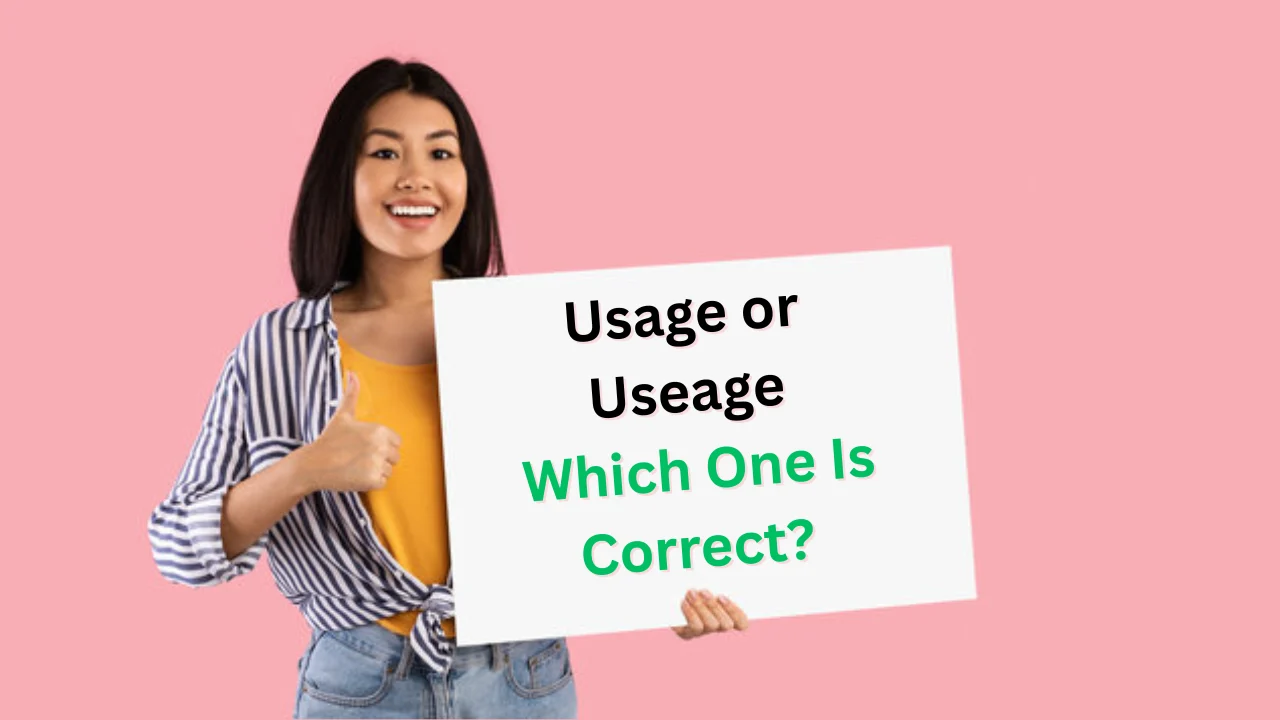
Have you ever typed useage and hesitated — “Wait, is that right?” You’re definitely not alone! This one confuses English learners, students, and even professionals.
Although usage and useage look and sound similar, only one is correct — and the other is simply a very common misspelling.
This mix-up happens because people assume the noun form of use should follow the same pattern as words like advantage or package. But English loves to break its own rules!
In this article, you’ll learn the true meaning of usage, why useage doesn’t exist in standard English, and how to remember the correct spelling forever. Let’s settle the “usage vs useage” debate once and for all. 🖋️
What Is “Usage”?
Usage is the correct and standard spelling of the word.
It’s a noun that means:
- The way something is used
- Customary practice or accepted language form
Meaning and Usage in Sentences
Use usage when talking about how something is used or how often it’s used — whether it’s a word, a product, or a resource.
Examples:
- “The usage of mobile phones has increased dramatically.”
- “English usage varies between countries.”
- “Check the manual for correct usage instructions.”
- “That phrase fell out of common usage decades ago.”
Grammar and Word Origin
The word usage comes from the Old French “us” (meaning “use”) combined with the suffix -age, which denotes an action, condition, or result.
So, usage literally means the act or manner of using something.
It’s been used correctly for over 600 years — and useage has never been an accepted form in standard English.
What Is “Useage”?
Useage (spelled u-s-e-a-g-e) is not a correct word in modern English.
It’s simply a common spelling mistake that happens when people assume use + -age = useage. Unfortunately, English doesn’t always play by those rules!
Why People Misspell It
- Spelling logic: Many English words end in -age — like marriage, carriage, or baggage.
- Pronunciation: When you say usage aloud, it sounds like use-age.
- Autocorrect oversight: Some typing programs don’t flag useage, letting it slip by.
Examples (Corrected):
- ❌ “The useage of this word is outdated.”
- ✅ “The usage of this word is outdated.”
💡 Quick Tip: There’s no “e” after “use” in usage. Remember: if you add that extra “e,” you lose your “A” in grammar! 😄
Key Differences Between Usage and Useage
| Feature | Usage | Useage |
|---|---|---|
| Correctness | ✅ Correct | ❌ Incorrect |
| Word Type | Noun | (Not a real word) |
| Meaning | The way something is used; customary practice | None |
| Origin | Old French us + -age | None (spelling error) |
| Example | “Modern English usage can be tricky.” | “Modern English useage can be tricky.” (❌) |
💡 Memory Trick:
Think of usage as use + age = wise use.
Drop the extra “e” — it’s not needed!
Real-Life Conversation Examples
Dialogue 1: In the Office
Sara: “Should I write useage policy or usage policy?”
Mark: “Definitely usage policy. Useage isn’t even a word.”
🎯 Lesson: Always use usage in formal writing or documents.
Dialogue 2: In Class
Student: “I think useage looks better.”
Teacher: “It might look right, but it isn’t. The correct spelling is usage — one ‘e’ is enough.”
🎯 Lesson: Spelling logic doesn’t always follow patterns.
Dialogue 3: Online Chat
User 1: “Data useage has increased this month.”
User 2: “Careful — it’s usage! Happens to the best of us.”
🎯 Lesson: Usage is correct, useage is a typo.
Dialogue 4: Copywriting Meeting
Editor: “There’s a typo — it says useage tips.”
Writer: “Oops! I always mix that up.”
🎯 Lesson: Always double-check “usage” before hitting publish.
Dialogue 5: Grammar Discussion
Friend: “Why isn’t it spelled useage?”
Linguist: “Because usage came from French, where use already had the ‘e’ dropped!”
🎯 Lesson: Historical roots explain why “usage” lost the extra “e.”
When to Use “Usage” vs “Useage”
| Situation | Use “Usage” | Use “Useage” |
|---|---|---|
| Talking about how something is used | ✅ | ❌ |
| Business or academic writing | ✅ | ❌ |
| Product manuals or policies | ✅ | ❌ |
| Grammar discussions | ✅ | ❌ |
| Informal writing | ✅ | ❌ |
| Technical or linguistic examples | ✅ | ❌ |
👉 Rule of Thumb:
There’s never a correct time to use useage.
No region, dictionary, or style guide recognizes it.
Fun Fact or History Section
Did you know? 📜
The word usage first appeared in English around the 1300s, adapted from Old French. It originally meant “habit or custom.”
By the 1500s, it started referring to language conventions — which is how we still use it today (like “proper English usage”).
Interestingly, useage has never appeared in reputable English dictionaries — not even once. Every style guide from Oxford to Merriam-Webster lists usage as the only correct spelling.
Conclusion
To sum it up: “Usage” is the correct spelling, meaning the way something is used or the customary practice of using it. “Useage” is just a common misspelling — it doesn’t exist in standard English.
So next time you’re writing a report, essay, or social media post, remember: it’s usage, not useage!
Drop that extra “e” and you’ll instantly sound more professional — and grammatically sharp. 😉