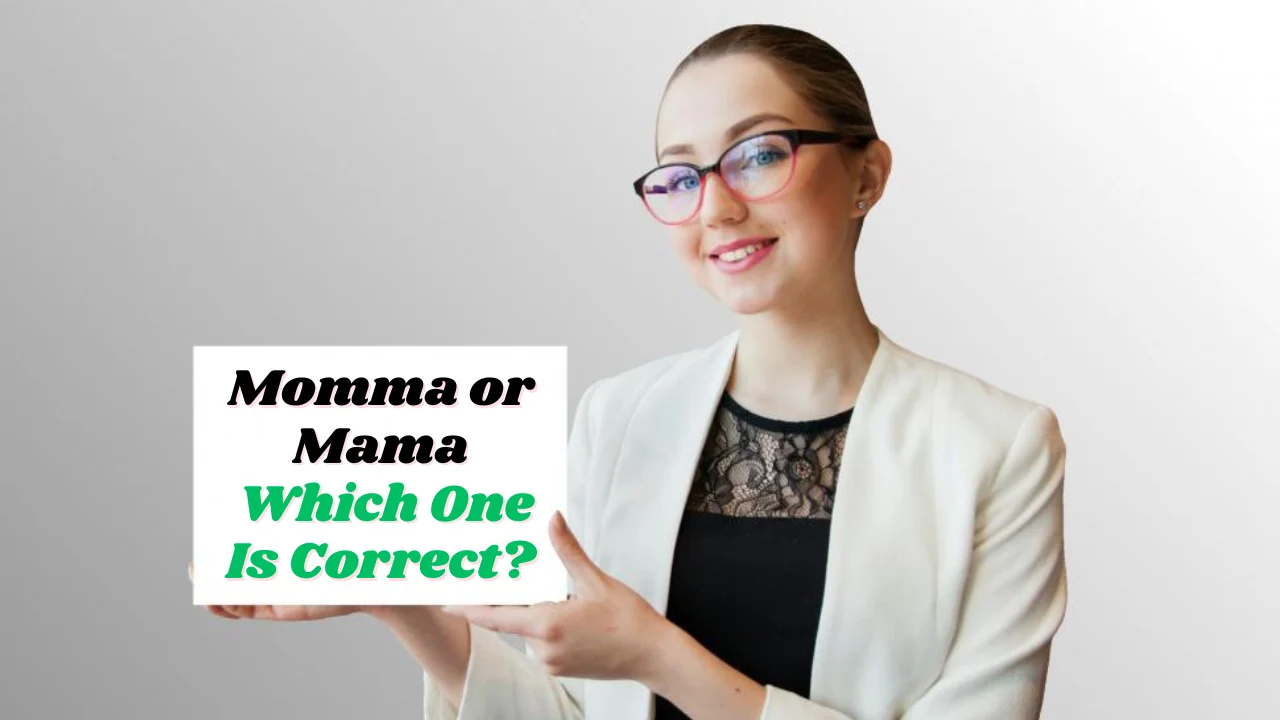
Have you ever wondered whether to write “momma” or “mama” when referring to your mother? 🤔
You’ve probably seen both spellings in books, songs, and social media — and yes, they sound exactly the same when spoken.
But when it comes to writing, which one is right?
Although “momma” and “mama” are often used interchangeably, they carry slightly different tones, origins, and regional preferences.
“Mama” is the older and more universal form, while “momma” is a modern, mostly American variant.
In this guide, we’ll explore what each version means, where they’re used, and how to choose the right one — plus fun examples, cultural notes, and easy memory tricks.
By the end, you’ll know exactly when to say “mama” and when to go with “momma.” ❤️
What Is “Mama”?
✅ “Mama” is the original and most widely recognized informal word for “mother.”
Meaning
“Mama” means mother or mom, used affectionately by children and adults alike.
It’s a warm, loving, and universal term found across many languages.
Examples:
- “I love you, mama.”
- “Her mama taught her how to cook.”
- “He called out for his mama when he was scared.”
Origin
The word “mama” is ancient — it comes from baby talk sounds that appear naturally across cultures.
Infants often make sounds like “ma” or “mama,” and many languages adopted that as the word for “mother.”
Fun fact:
- In Spanish → mamá
- In Italian → mamma
- In Swahili → mama
- In English → mama
So “mama” isn’t just a word — it’s a sound of comfort recognized almost everywhere on Earth. 🌍
Tone and Usage
“Mama” feels traditional, gentle, and affectionate.
It’s common in literature, family conversations, and cultures that value closeness and warmth.
Examples:
- “Mama always knows best.”
- “She’s a proud mama of two.”
- “Goodnight, mama.”
What Is “Momma”?
✅ “Momma” is a modern, American English spelling variation of “mama.”
Meaning
“Momma” means mother as well — but it’s often used in casual, modern, or Southern U.S. contexts.
Examples:
- “That’s my momma’s recipe!”
- “Come here, momma.”
- “She’s a strong, independent momma.”
Origin
“Momma” evolved from “mama” as American English developed its own pronunciation patterns.
It reflects the Midwestern and Southern tendency to say mah-muh or mom-uh instead of mah-mah.
Over time, that sound difference influenced spelling — leading to “momma.”
Tone and Usage
“Momma” carries a more regional, down-to-earth, or colloquial feel.
It’s especially popular in the Southern United States, African American Vernacular English (AAVE), and country music culture.
Examples:
- “My momma raised me right.”
- “Don’t mess with my momma!”
- “Momma’s cooking beats everything.”
Key Differences Between “Mama” and “Momma”
| Feature | Mama | Momma |
|---|---|---|
| Meaning | Informal word for “mother” | Informal U.S. variant of “mama” |
| Spelling Origin | Old English / European | Modern American |
| Pronunciation | “MAH-mah” | “MOM-uh” |
| Tone | Sweet, tender, universal | Casual, earthy, regional |
| Formality | Common in writing and speech | More colloquial or dialectal |
| Common Regions | UK, Africa, Asia, global use | USA (especially the South) |
| Example | “Mama always knows best.” | “My momma taught me better.” |
💡 Memory Trick:
- Mama = Global and classic 🌎
- Momma = American and homey 🇺🇸
Real-Life Conversation Examples
Dialogue 1: Family Chat
Emma: “Should I write ‘Happy Birthday Mama’ or ‘Happy Birthday Momma’ on the card?”
Sophie: “Either works, but ‘Mama’ feels more classic — like something you’d see in a storybook.”
🎯 Lesson: “Mama” feels timeless and universal.
Dialogue 2: Southern Talk
Jake: “That’s my momma’s homemade pie!”
Ben: “You sound like you’re straight outta Texas!”
🎯 Lesson: “Momma” adds a warm, Southern charm to speech.
Dialogue 3: Writing a Song
Tina: “Which sounds better — ‘Hey Mama’ or ‘Hey Momma’?”
Producer: “‘Hey Mama’ is catchier — it’s used in many hit songs!”
🎯 Lesson: “Mama” is more common in pop culture and global music.
Dialogue 4: Kids’ Speech
Toddler: “Mama, look!”
Parent: “Yes, baby, mama sees you!”
🎯 Lesson: “Mama” is natural for early child language development.
Dialogue 5: Grammar Debate
Lisa: “I saw both ‘mama’ and ‘momma’ in different books. Which one’s correct?”
Ryan: “They both mean mother — it just depends on the region and vibe you want.”
🎯 Lesson: Both are acceptable in informal writing; context decides which fits best.
When to Use “Mama” vs “Momma”
| Situation | Use “Mama” | Use “Momma” |
|---|---|---|
| Global writing (songs, poems, stories) | ✅ | ❌ |
| Southern or rural U.S. dialogue | ❌ | ✅ |
| Speaking with children | ✅ | ✅ |
| Social media captions | ✅ | ✅ |
| Professional or formal writing | ⚠️ (informal) | ❌ |
| Cultural references (e.g., “Big Mama”) | ✅ | ✅ (regional) |
👉 In short:
- Use “mama” for a universal, tender tone.
- Use “momma” for a regional, casual, or emotional feel.
Fun Facts About “Mama” and “Momma”
💬 1. “Mama” Is Nearly Universal
Across hundreds of languages, “mama” or a similar sound means “mother.”
Linguists believe it’s one of the first sounds babies can make — that’s why it appears everywhere! 👶
🎵 2. Pop Culture Loves “Mama”
From “Hey Mama” (Black Eyed Peas) to “Mama Mia” (ABBA), the classic “mama” appears in dozens of famous songs and movies.
🍳 3. “Momma” in Southern Culture
In the American South, “momma” is almost a badge of pride — a symbol of strength, love, and family roots.
Phrases like “Don’t talk back to yo’ momma” or “That’s my momma’s secret recipe” are part of everyday speech.
How to Choose Between “Mama” and “Momma”
Here’s a quick decision guide:
| Ask Yourself… | If Yes → Use “Mama” | If Yes → Use “Momma” |
|---|---|---|
| Am I writing for a global or mixed audience? | ✅ | ❌ |
| Am I writing dialogue for a Southern or casual tone? | ❌ | ✅ |
| Am I writing a poem, caption, or song lyric? | ✅ | ✅ |
| Do I want to sound traditional or affectionate? | ✅ | ❌ |
| Do I want to sound homey or regional? | ❌ | ✅ |
🎯 Tip: If you’re unsure which fits best, “mama” is always a safe and recognized choice.
Cultural and Linguistic Insights
1. “Mama” is Cross-Cultural.
The word appears in nearly every language — maman (French), mamma (Italian), mamãe (Portuguese), mama (Swahili), and more.
2. “Momma” is Dialectal.
You’ll mainly hear it in the United States, especially in African American English, Appalachian speech, and country culture.
3. Both Convey Affection.
Regardless of spelling, they both carry deep emotional warmth — symbolizing love, care, and family connection. ❤️
Common Mistakes to Avoid
🚫 “My Momma loves gardening.” (in British English context)
✅ “My Mama loves gardening.”
🚫 “Mama, can you pick me up?” (in a Southern U.S. story — doesn’t match dialect)
✅ “Momma, can you pick me up?”
🎯 Lesson: Choose spelling based on audience and setting, not personal preference alone.
Mini Practice Section
Choose the right spelling:
- “___ said dinner’s ready.”
- a) Momma ✅ (if Southern U.S.)
- b) Mama ✅ (if universal)
- “Goodnight, ___.”
- a) Mama ✅
- “My ___ raised me strong.”
- a) Momma ✅
- “___ always knows what’s best.”
- a) Mama ✅
🎯 Tip: There’s no wrong choice — just choose the one that fits your tone and culture.
Conclusion
To sum it up: both “mama” and “momma” mean mother, but their usage depends on region and tone.
Mama is the classic, global version — simple, timeless, and widely understood.
Momma is the American, more casual form — often used in Southern or heartfelt expressions.
So whether you call her mama, momma, or even mom, the love behind the word stays the same. 💖
Next time you write about her, you’ll know exactly which one fits best — and your mama (or momma) will be proud!