Introduction
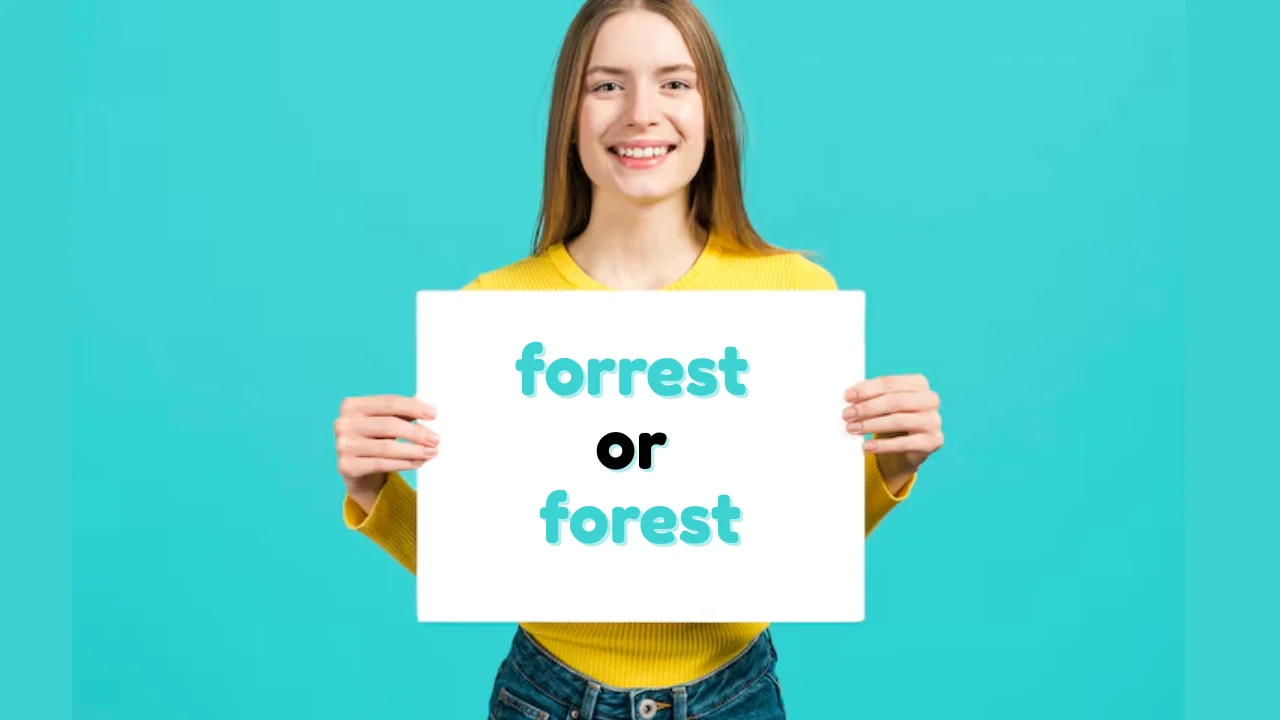
English is full of word pairs that look nearly identical but have completely different meanings and forest vs. forrest is one of the most commonly confused examples. These two spellings differ by only one letter, yet using the wrong one can instantly turn a polished message into an embarrassing mistake. If you’ve ever paused mid-sentence wondering whether to write forest or forrest, you’re definitely not alone.
Even native English speakers mix them up, especially in fast writing, emails, social posts, and academic assignments. While both words sound the same, only one is correct in most contexts. The other is used in very specific situations and is actually far less common.
In this complete, SEO-optimized guide, you’ll learn the exact difference between forest and forrest, when to use each word, their meanings, correct spelling tricks, and real sentence examples to help you avoid confusion. By the end, you’ll never mix them up again—and your writing will look more professional, confident, and accurate.
Forest vs. Forrest: The Short Answer
- Forest (one r) = A large area covered with trees.
- Forrest (two rs) = A name (first name or surname), not a common English word.
Correct in general writing: forest
Incorrect: forrest (unless referring to a person or brand name)
What Does “Forest” Mean?
Forest is the standard English noun that refers to a large area filled with trees, vegetation, wildlife, and natural ecosystems.
Examples
- We hiked through the forest on Saturday.
- Amazon is the largest forest in the world.
- The cabin was hidden deep inside the forest.
Parts of Speech
- Noun: The forest is peaceful.
- Adjective (less common): Forest animals, forest trails, forest management.
Synonyms for “Forest”
- Woods
- Jungle
- Timberland
- Woodland
- Rainforest
Common Phrases with “Forest”
- Forest fire
- Forest ranger
- Forest conservation
- Tropical forest
If you are describing nature, land, environment, or trees, the correct spelling is ALWAYS “forest.”
What Does “Forrest” Mean?
Forrest (with two rs) is not a standard English word.
It is a proper noun, mainly used as:
- A first name
- A surname (family name)
- A brand name or business name
Famous Examples
- Forrest Gump — the iconic movie character
- People named Forrest
- Brands or companies with the name “Forrest”
Example Sentences
- Forrest is coming to the meeting today.
- The new CEO’s name is Forrest Johnson.
- I watched Forrest Gump last weekend.
If you’re referring to a person or company, then “Forrest” is correct.
Otherwise, it’s wrong.
Forest vs. Forrest: Detailed Comparison
| Feature | Forest (correct word) | Forrest (proper noun) |
|---|---|---|
| Part of Speech | Common noun | Proper noun |
| Meaning | A wooded area with trees | A name (person, brand) |
| Usage | General writing | Only for specific names |
| Example | “The forest was beautiful.” | “I met Forrest yesterday.” |
| Frequency | Very common | Rare |
When to NEVER Use “Forrest”
- In school essays
- Business emails
- Reports
- Creative writing
- Blogs
- Descriptions of nature
Unless you’re referring to an actual person named Forrest, it’s incorrect.
Why Do People Confuse “Forest” and “Forrest”?
Here are the common reasons:
1. They sound the same (homophones).
Both words are pronounced /ˈfɔːrɪst/.
2. People associate the double “r” with other English patterns
Such as:
- carrot
- correct
- borrow
But forest doesn’t follow that pattern.
3. The movie “Forrest Gump” made the spelling memorable.
And because the name appears so often, many assume the double-r version is general use.
4. Speed typing errors.
Writers often double letters accidentally when typing quickly.
How to Remember the Correct Spelling
Here are easy tricks to avoid confusion:
1. “Forest” has ONE ‘r’—just like ONE big area of trees.
Think:
✔ One “r” = one region of trees.
2. “Forrest” has TWO ‘r’s—just like the character Forrest Gump.
If you’re not writing about a person, don’t use “Forrest.”
3. “Forest” contains the word “rest.”
You rest in the forest.
That’s the correct spelling.
Correct and Incorrect Usage Examples
Correct
- We camped in the forest last night.
- They planted trees to restore the forest.
- Forest animals are often active at night.
Incorrect
- We camped in the forrest last night.
(WRONG — unless you’re camping with a guy named Forrest.)
Correct (name)
- Forrest invited us to dinner.
Forest in Popular Usage
The word “forest” is widely used in:
- Environmental science
- Geography
- Tourism
- Forestry
- Climate change studies
Examples:
- “Forest fires are increasing due to rising temperatures.”
- “Forest management is essential for biodiversity.”
It’s a globally recognized and frequently used term.
Forrest in Popular Usage
“Forrest” appears mostly in:
- Pop culture (Forrest Gump)
- Names of real people
- A few companies or brands
It is not typically used in English vocabulary outside of these contexts.
Is “Forrest” Ever Correct as a Common Word?
No.
There is no English noun, verb, adjective, or adverb spelled forrest.
It is ONLY correct as a name.
Common Questions About Forest vs. Forrest
1. Is “Forrest” a misspelling?
Yes, unless you’re referring to a person or brand.
2. Can both words be used in academic writing?
Only “forest” should be used academically.
3. Is “Forrest” older or newer spelling?
“Forrest” has always been a name, never a standard English word.
4. Are they pronounced the same?
Yes. Context determines the meaning.
Forest vs. Forrest: Which One Should You Use in Writing?
Here’s a simple rule:
✔ Use forest for trees and nature.
✔ Use Forrest for someone’s name.
✘ Never use “forrest” in general writing.
This guideline keeps your writing accurate, professional, and grammatically correct.
Conclusion
Although forest and forrest look nearly identical, their meanings are completely different. Forest is the correct English word referring to an area of trees, while Forrest is a proper name used only when talking about a specific person or brand. Mixing them up is a common mistake, but one that’s easy to avoid with the memory tricks and examples provided in this guide.
Whether you’re writing emails, essays, business content, or social media posts, choosing the right spelling shows clarity, accuracy, and professionalism. Stick with forest for nature-related writing, and reserve Forrest for names. Now you can write with confidence—no more second-guessing.