Introduction
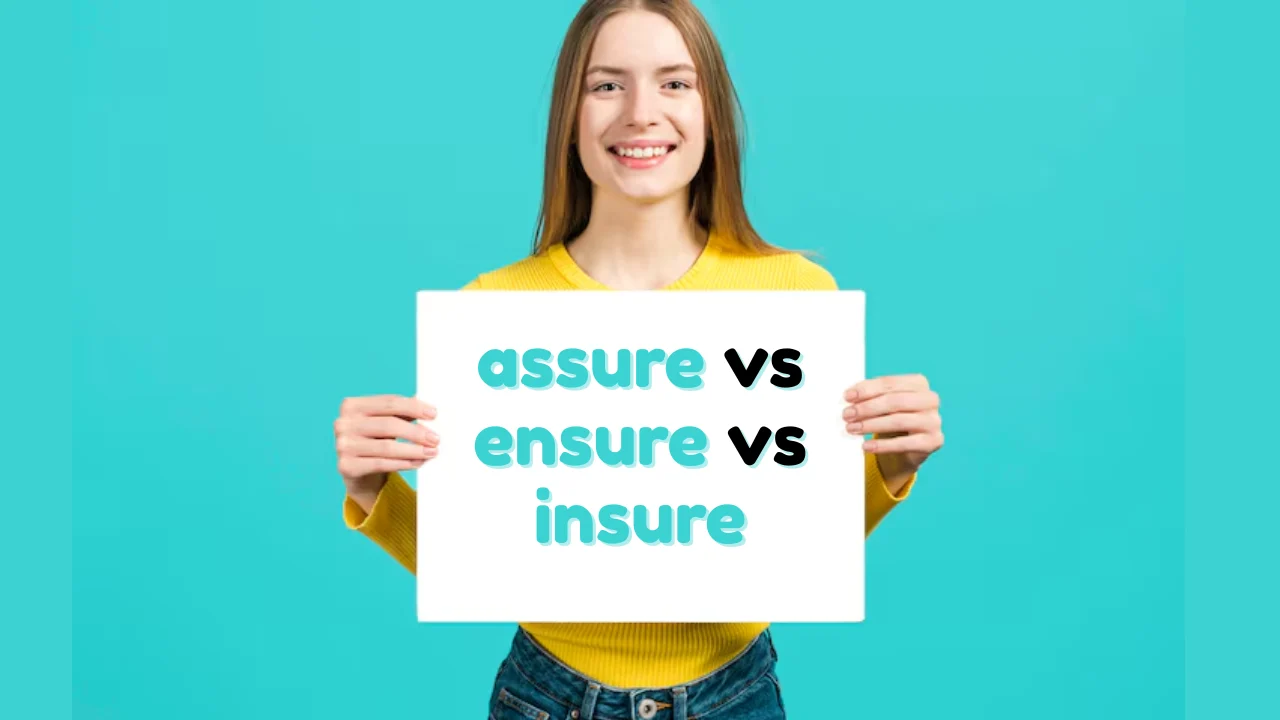
Few word groups confuse writers as much as assure, ensure, and insure. They look similar, sound almost identical, and all seem to suggest some form of “making something safe or certain.” Because of this overlap, many people use them interchangeably especially in emails, articles, and professional writing.
However, these three words have distinct meanings and specific use cases. Using the wrong one can subtly change your message or make your writing sound less polished. Although they sound similar, they serve completely different purposes.
In this in-depth guide, we’ll clearly explain assure vs ensure vs insure in simple, conversational English. You’ll get definitions, examples, a comparison table, real-life dialogue examples, and easy memory tricks so you’ll always choose the right word with confidence.
What Is Assure?
Let’s start with assure.
Meaning of assure
Assure means to remove doubt or give confidence to a person. It’s always about people and feelings, not outcomes or objects.
Think of assure as emotional reassurance.
How assure works in sentences
Examples:
- I assure you everything will be fine.
- She assured him that the report was accurate.
- The manager assured the team of full support.
Key characteristics of assure
- Involves people
- Focuses on confidence or reassurance
- Often followed by “someone” or “someone that…”
✅ Key rule:
If you’re calming or reassuring a person, use assure.
What Is Ensure?
Now let’s look at ensure.
Meaning of ensure
Ensure means to make certain that something happens. It focuses on results, actions, or outcomes, not emotions.
Think of ensure as taking steps to guarantee a result.
How ensure works in sentences
Examples:
- Please ensure that the door is locked.
- This checklist will ensure accuracy.
- Training helps ensure consistent performance.
Key characteristics of ensure
- Focuses on outcomes
- Used for processes, systems, and results
- Common in professional and technical writing
✅ Key rule:
If you mean “make sure”, use ensure.
What Is Insure?
Now let’s cover insure.
Meaning of insure
Insure specifically relates to insurance and financial protection. It means to protect against financial loss, usually through an insurance policy.
This is the most specific of the three.
How insure works in sentences
Examples:
- We need to insure the house.
- She insured her car against theft.
- The company is fully insured.
Key characteristics of insure
- Deals with insurance
- Involves financial risk
- Often used in legal and business contexts
✅ Key rule:
If money, coverage, or insurance policies are involved, use insure.
Key Differences Between Assure, Ensure, and Insure
Here’s a clear comparison to make everything easy:
| Feature | Assure | Ensure | Insure |
|---|---|---|---|
| Main focus | People & feelings | Results & outcomes | Financial protection |
| Meaning | Reassure someone | Make certain | Provide insurance |
| Used with | People | Actions, events | Property, health, life |
| Replaceable with “make sure”? | ❌ No | ✅ Yes | ❌ No |
| Common context | Communication | Processes | Insurance |
🎯 Quick takeaway:
- Assure = people
- Ensure = results
- Insure = money & protection
Real-Life Conversation Examples
Let’s see how these words get mixed up—and how to fix them.
🗣️ Dialogue 1: Workplace Email
Employee: I will assure the files are backed up.
Manager: Better to say ensure you’re talking about a result.
Employee: Got it.
🎯 Lesson: Outcomes require ensure.
🗣️ Dialogue 2: Customer Support
Agent: I ensure you that your refund is coming.
Supervisor: Use assure you’re reassuring the customer.
Agent: That makes sense.
🎯 Lesson: Reassuring people = assure.
🗣️ Dialogue 3: Insurance Office
Client: Should I ensure my car?
Agent: You should insure it.
Client: Right—thanks!
🎯 Lesson: Financial protection = insure.
🗣️ Dialogue 4: Casual Conversation
Friend: Can you assure the tickets are booked?
You: I can ensure it, yes.
Friend: Perfect.
🎯 Lesson: Booking and confirmation use ensure.
When to Use Assure vs Ensure vs Insure
Here’s a simple decision guide.
✅ Use assure when:
- You’re calming fears
- You’re speaking directly to a person
- Confidence or trust is involved
Examples:
- I assure you
- She assured her team
- Let me assure you
✅ Use ensure when:
- You mean “make sure”
- You’re guaranteeing an outcome
- Talking about procedures or actions
Examples:
- Ensure compliance
- Ensure accuracy
- Ensure safety
✅ Use insure when:
- Insurance policies are involved
- Financial protection is the goal
- Risk management is discussed
Examples:
- Insure your home
- Insure against loss
- Fully insured business
Common Mistakes to Avoid
❌ “I will insure the meeting runs smoothly.”
✔️ “I will ensure the meeting runs smoothly.”
❌ “Let me ensure you everything is okay.”
✔️ “Let me assure you everything is okay.”
❌ “We should ensure the car.”
✔️ “We should insure the car.”
Fun Fact & History
Here’s a language insight:
- All three words come from the same Latin root securus (meaning “safe”)
- Over time, English assigned different roles to avoid confusion
- Modern English strictly separates emotional, procedural, and financial meanings
📚 Fun note:
American English tends to use ensure more broadly, while British English keeps the distinctions very strict.
Conclusion
The difference between assure vs ensure vs insure is clearer than it first appears. Assure is for people and reassurance. Ensure is for making sure something happens. Insure is strictly for financial protection and insurance.
Once you connect each word to its purpose, the confusion disappears completely.
Next time someone uses assure, ensure, or insure, you’ll know exactly what they mean and you’ll use the right word every time! ✅